Nike SB: The Trick Tree
How do you turn everything skaters know about tricks into a map they can explore?
- Client
- Nike SB
- Agency
- R/GA
- Role
- Data visualization development and design
- Project recognition
3 awards
- Cannes LionsBronze Mobile Lion
- Clio SportsBronze, Trick Tree design
- MMA SmartiesGold, Mobile App
- Responsibilities led
- Trick taxonomy and information architectureData visualization designVisualization developmentInteraction design for trick navigation
Overview
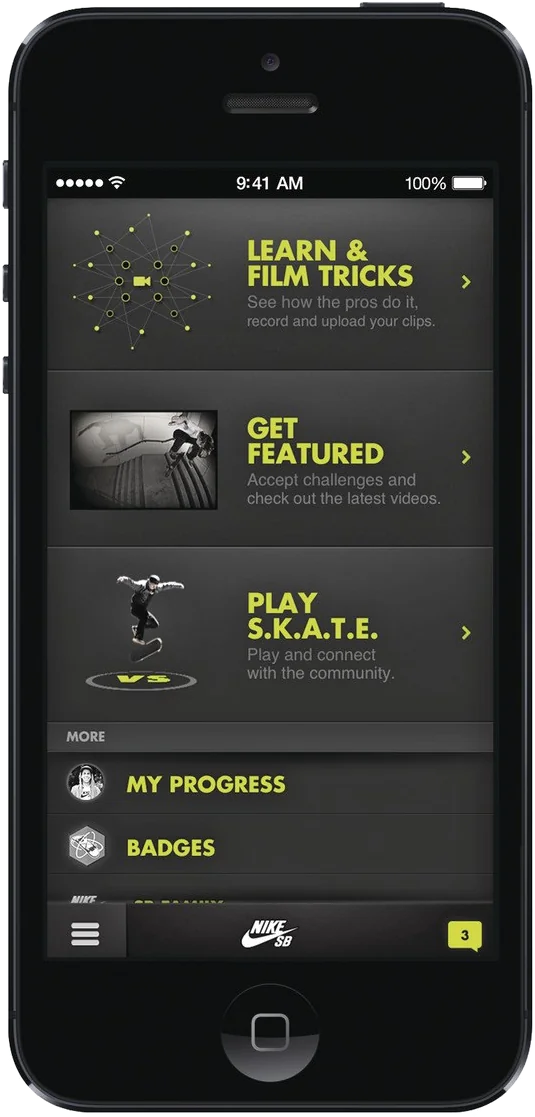
Skateboarding knowledge lived in scattered videos, forums, magazines and local scenes. The Nike SB app set out to bring it together: more than 600 tricks in one explorable system, with multi-angle video, challenges from Nike SB pros and head-to-head games of S.K.A.T.E.
At R/GA I developed and designed the data visualization at the heart of it, the Trick Tree, working with the Nike SB app design team to make the whole taxonomy navigable on a phone.
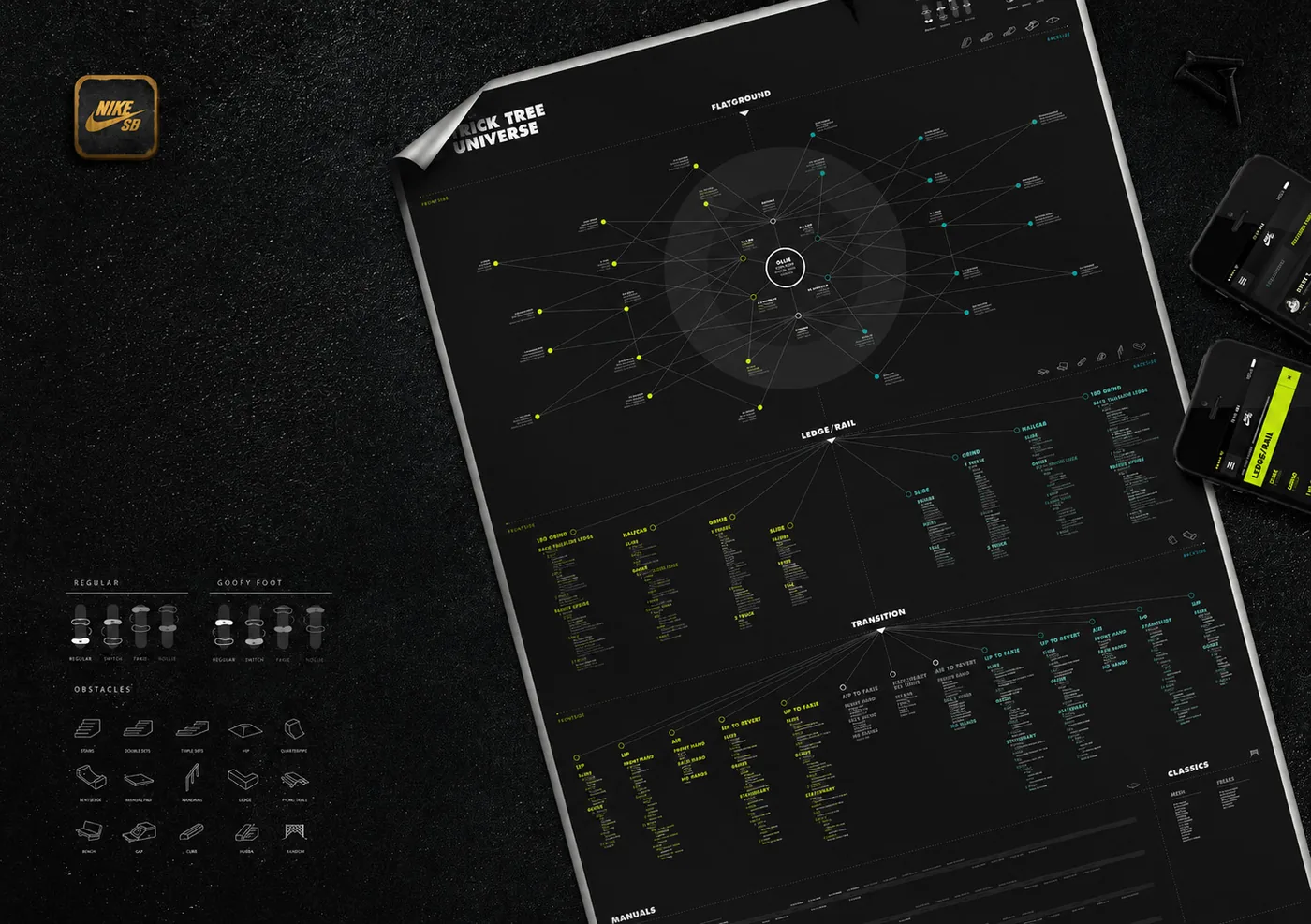
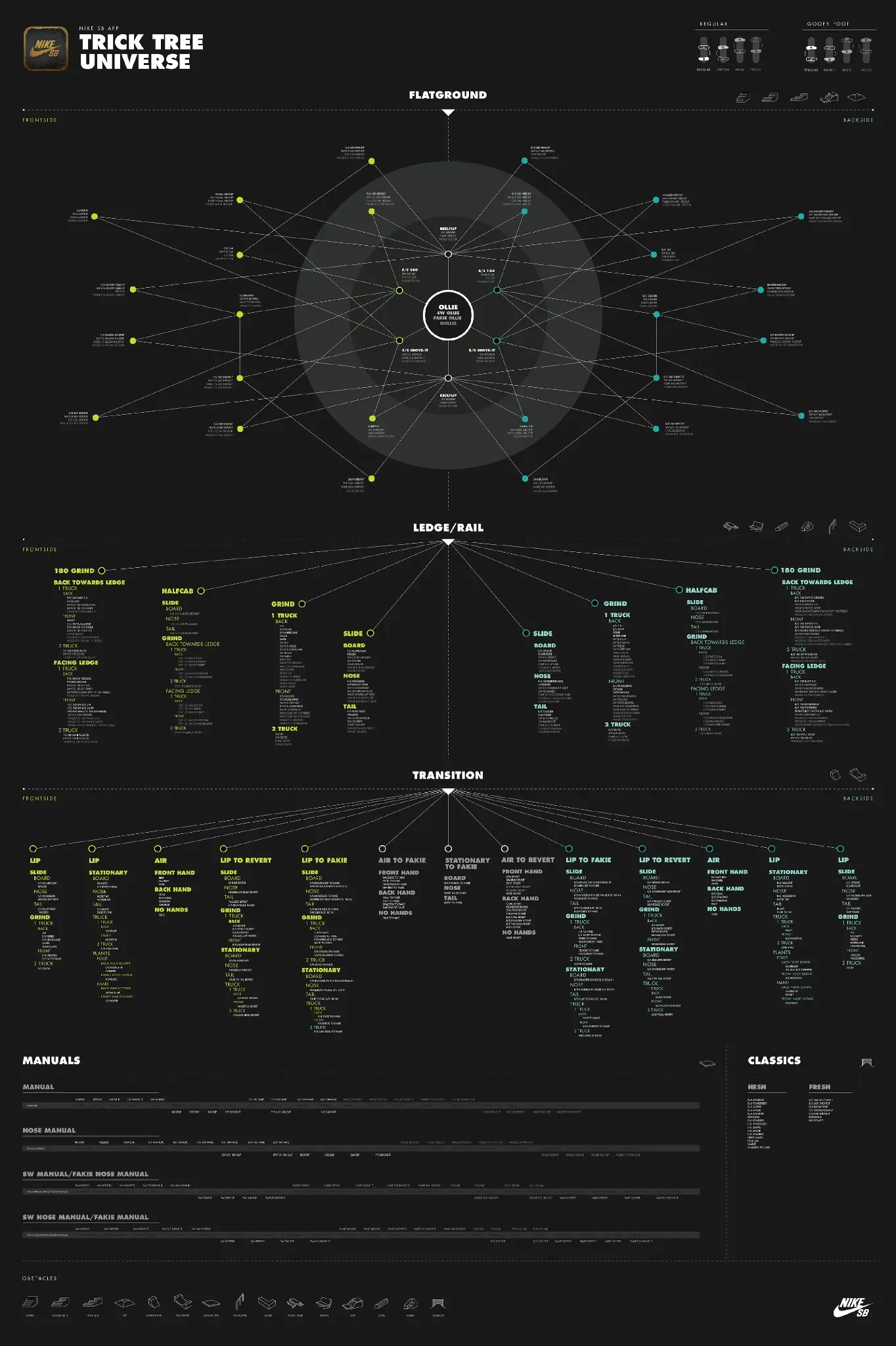
Every trick in relation to every other
Progression in skateboarding isn’t linear. It branches through terrain, stance, rotation and body mechanics. So rather than a list, we treated the sport as a living network, where every trick connects to the tricks it builds on and leads to.
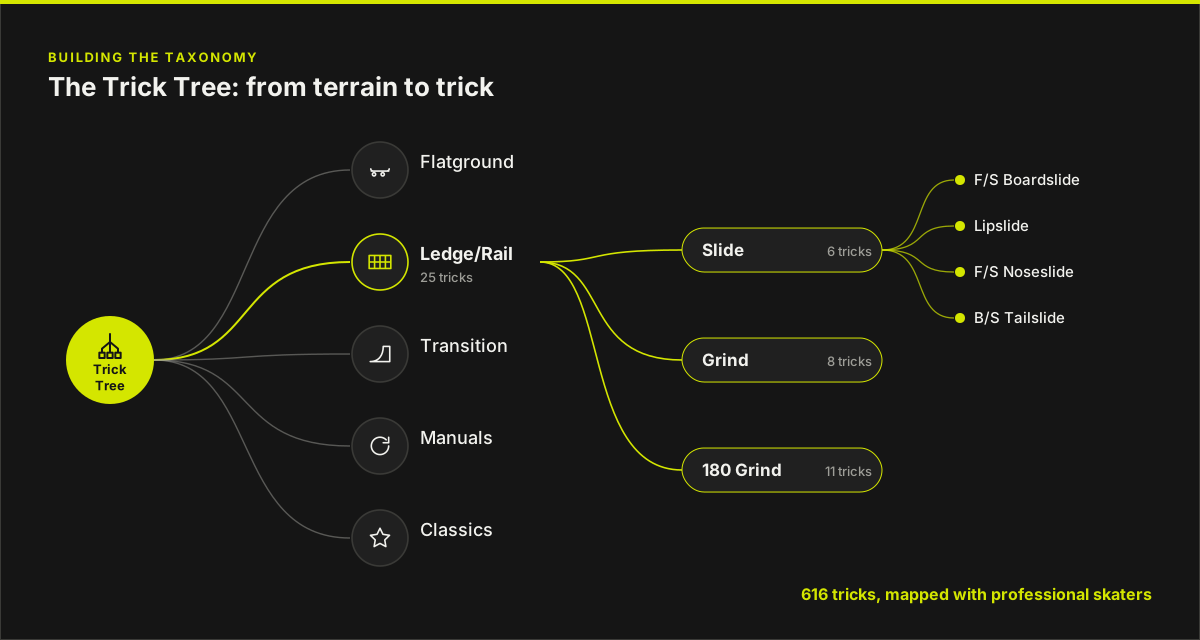
Working with professional skaters, the team mapped hundreds of tricks into one structure spanning flatground, ledge and rail, transition, manuals and classics: 616 tricks in all.
Organized the way skaters think
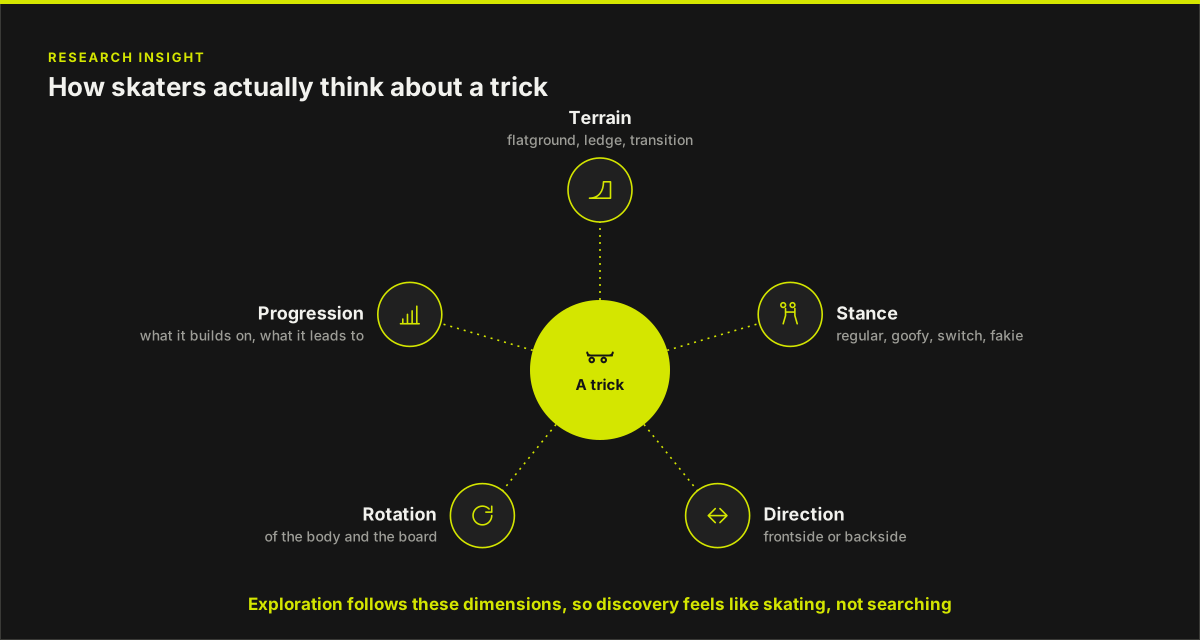
Skaters don’t learn tricks alphabetically. They think in terrain, stance, direction, rotation and progression, so those became the dimensions for exploring the tree.
Terrain as the way in
Each terrain category became an iconic object, a trash can and cone, a ledge and rail, a curved transition, instantly recognizable to skaters and working as the doorway into its part of the tree.
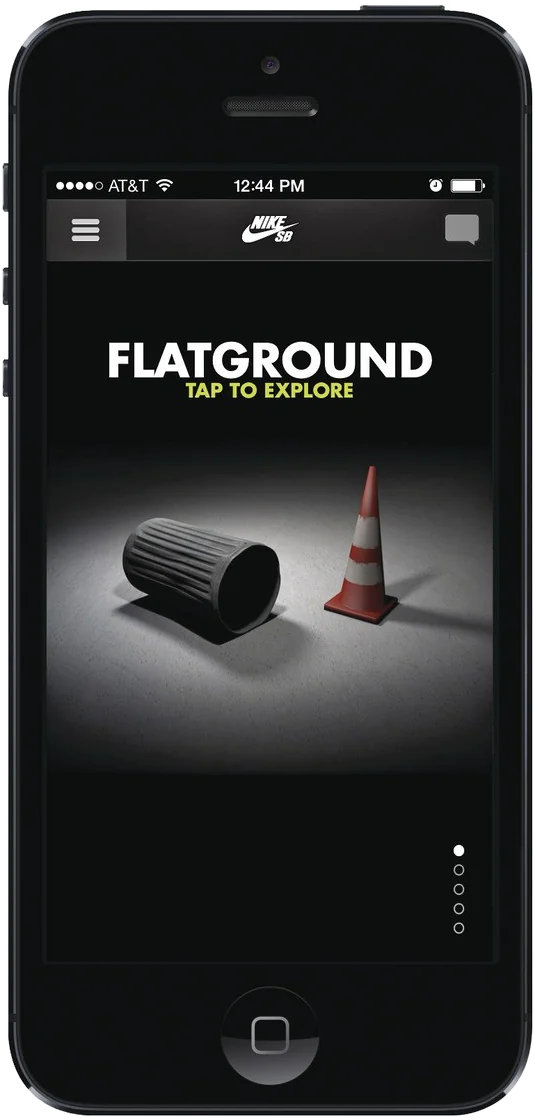
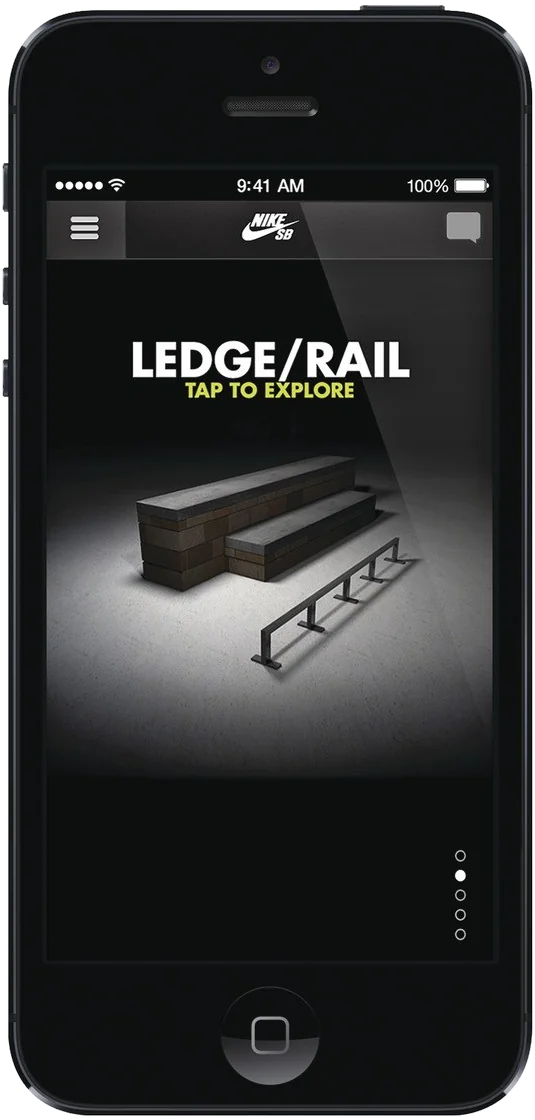
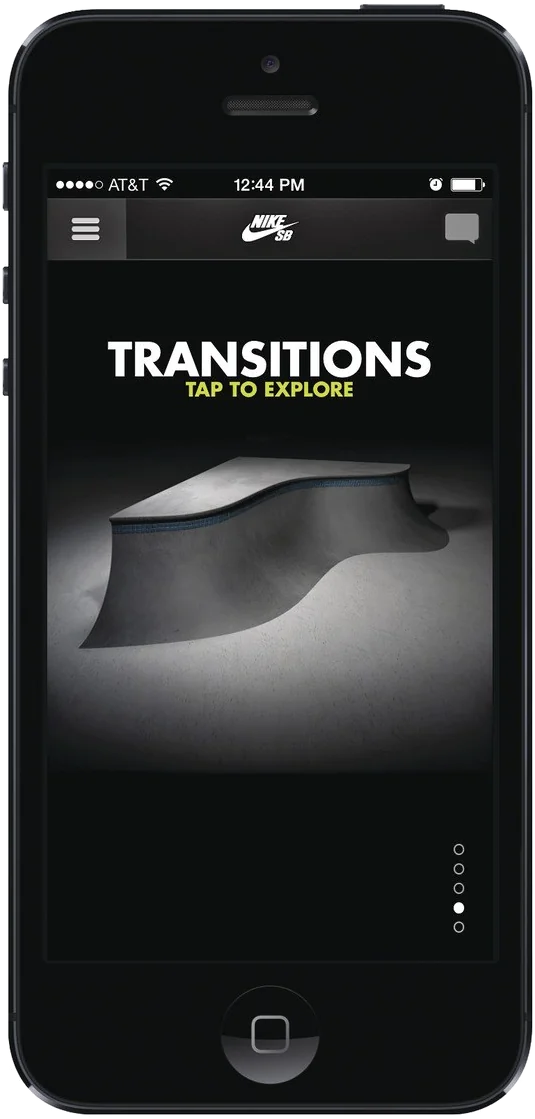
From terrain to trick
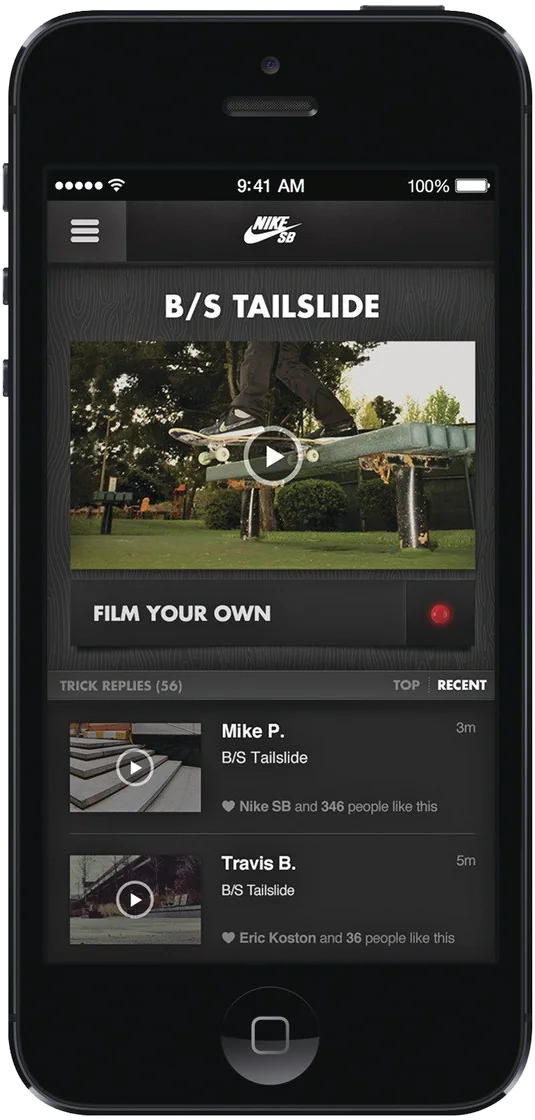
Inside each terrain, tricks group into families, such as 180 grinds, grinds and slides, and can be filtered by stance and direction. Skaters track what they’ve landed as they go, and every trick opens to video of how it’s done and replies filmed by other skaters.
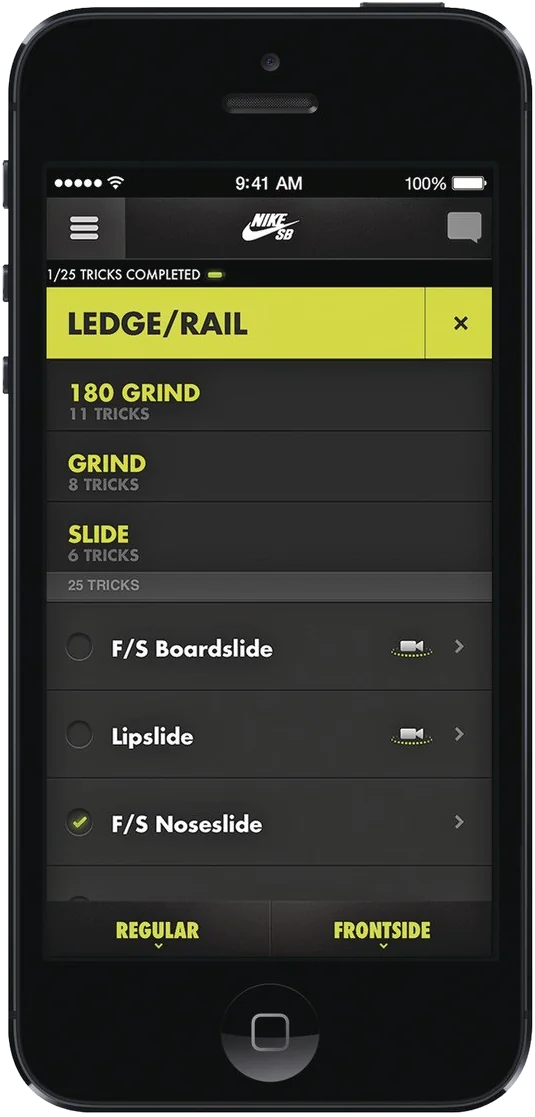
Learning through motion
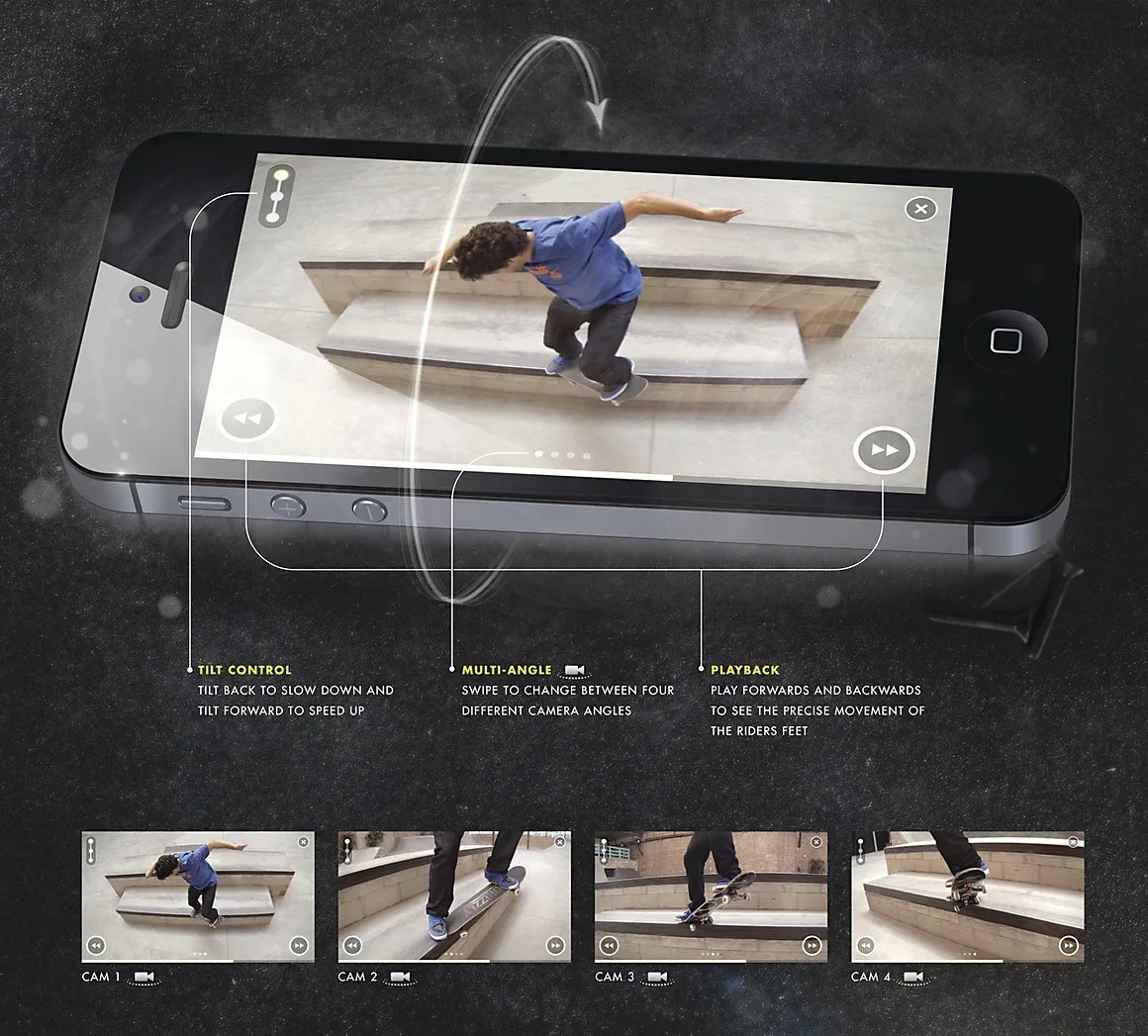
Multi-angle playback lets skaters study a trick from four camera angles, play it forward and backward, and tilt the phone to slow down or speed up, to see exactly how the rider’s feet move.
A shared, evolving archive
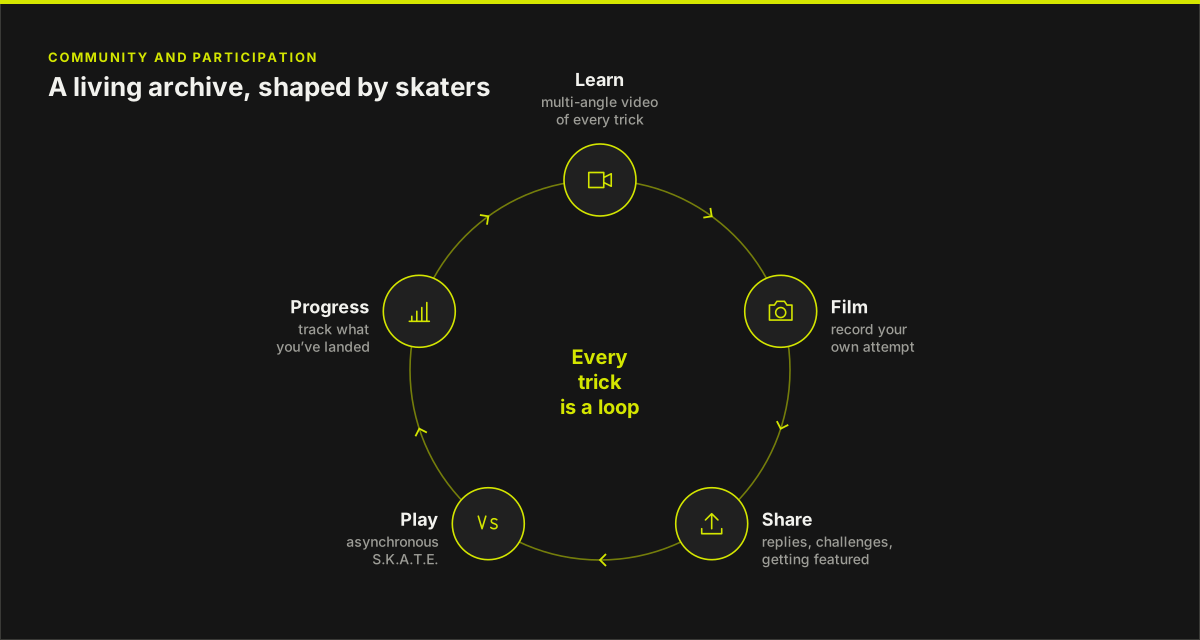
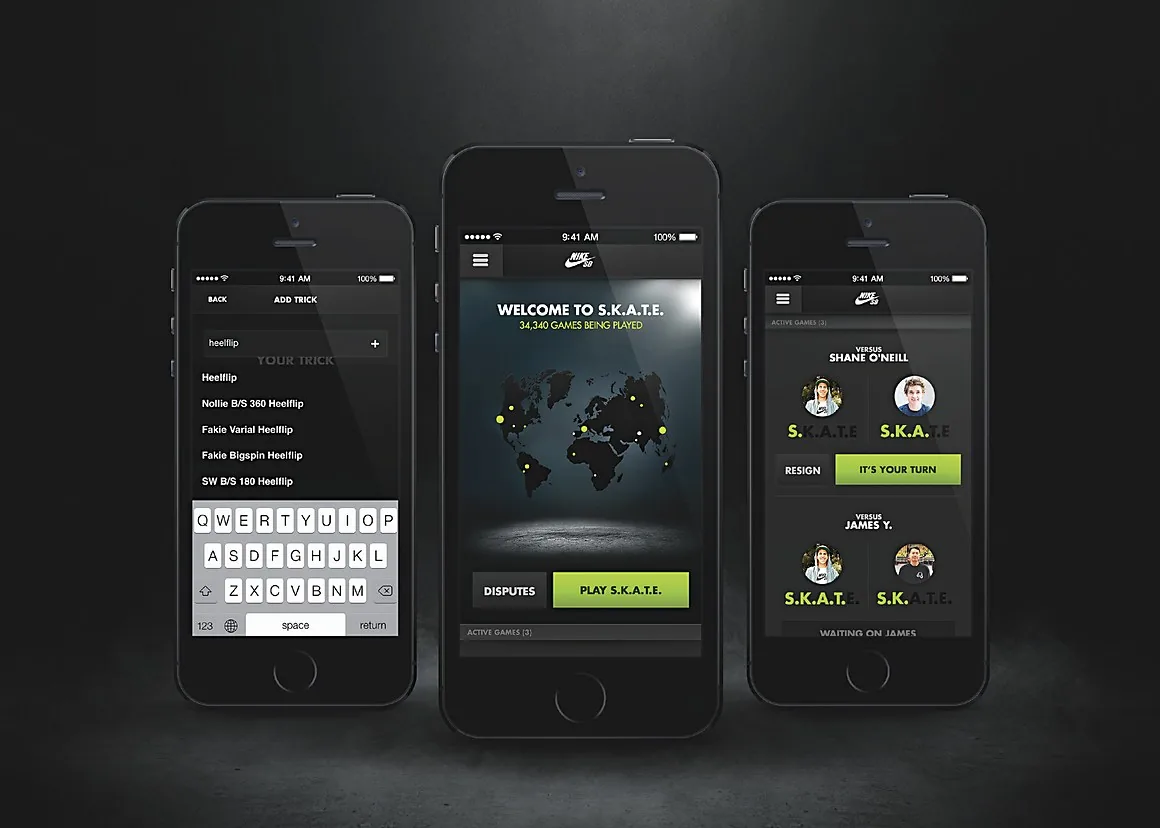
Skaters film and upload their own attempts, take on challenges from Nike SB pros, and play asynchronous games of S.K.A.T.E. against friends and strangers around the world, so the app grows into a shared archive rather than a fixed catalog.
In its first four months, skaters uploaded more than 60,000 videos and played more than 10,000 games of S.K.A.T.E. To launch it, 28 skaters set out to land all 616 tricks in 24 hours, live on YouTube, with 178,000 people watching.